Things the Forest Knows That Cities Forget

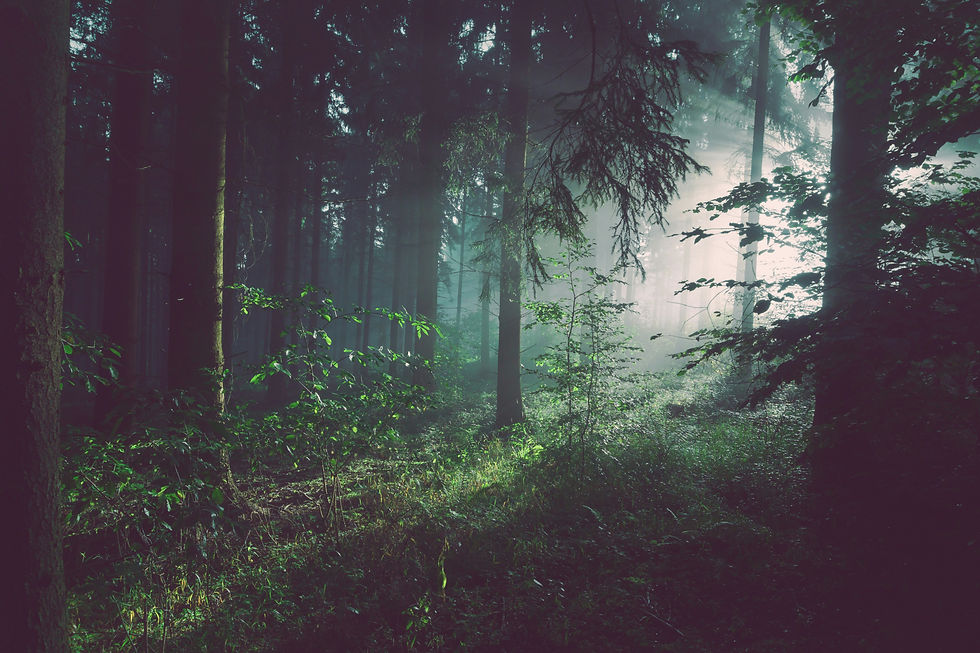
I did not realize how much I depended on being close to nature until I moved away from it. For most of my life, nature was never something I had to intentionally seek out. It was simply there, woven into the fabric of everyday life. In Winston-Salem, trees lined the roads and wooded trails were never far away. Even in Fayetteville, there were places where you could step away from the noise and find a patch of quiet. Nature was not a destination. It was part of the landscape, something that existed alongside daily routines without requiring effort or planning.
Living near Philadelphia has been a different experience. There is plenty to admire about a city. I enjoy the architecture, the history, and the feeling that something is always happening. There is an energy here that smaller places cannot quite replicate. Yet after living here for a while, I have noticed a persistent feeling that I could never quite put into words. It is not homesickness exactly, nor is it dissatisfaction. It feels more like the absence of a familiar presence. The farther I get from regular encounters with forests, mountains, and open spaces, the more I realize how much they grounded me.
What I miss most is not necessarily the scenery. I miss the perspective. Cities are built around human needs and human timelines. Every corner serves a purpose. Every space is occupied. Life moves according to schedules, deadlines, notifications, and expectations. There is always somewhere to be and something to accomplish. Even moments of rest often feel scheduled between obligations. After a while, it becomes easy to forget that the world operates on scales much larger than our calendars.
The forest never forgets. A fallen tree can spend decades slowly becoming part of the soil. Moss creeps across a rock so gradually that its growth is almost invisible. Streams carve pathways through stone over hundreds of years without concern for efficiency or productivity. Nothing in the forest seems interested in proving itself. Nothing is rushing to become something else. Everything simply participates in the process of being alive.
I have always found comfort in that. When I walk through a forest, I am reminded that growth is rarely dramatic. The most important changes often happen quietly and over long periods of time. Trees do not force themselves taller overnight. Wildflowers bloom when conditions are right. Entire ecosystems depend on cycles of rest, decay, and renewal. The forest understands something that modern life often struggles to accept: not every moment must be productive to be meaningful.
That lesson feels harder to hear in a city. Here, there is a constant sense of motion. The noise never fully disappears. Even at night, there is a hum of activity that reminds you the world is still moving. There are days when I find myself longing for the particular kind of silence that exists in the woods. Not true silence, because forests are never silent, but the kind of quiet that comes from being surrounded by things that are unconcerned with human urgency. The rustle of leaves, the sound of water moving over rocks, birds calling to one another across the trees. None of it is trying to sell you something, impress you, or demand your attention.
Maybe that is what the forest knows that cities forget. Life is not a race toward some final destination. Growth takes time. Stillness has value. Existing is not the same thing as falling behind. The natural world has been practicing these lessons for millions of years, yet they are remarkably easy to lose sight of when surrounded by concrete and traffic.
I suspect that is why I miss being closer to nature. Not because I need constant adventure or breathtaking landscapes, but because forests have a way of putting life back into perspective. They remind me that I am part of something much older and much larger than myself. They remind me that not everything worth measuring can be counted. Most importantly, they remind me that there is no prize for hurrying through a life that is already far too short.


